Biltmore

I wrote a piece called "Families, Not Kings" here: Greenville.substack.com
Please subscribe to that newsletter if you want to get more travel blogs and personal updates and photo content from me. I'm considering it more of my "normal people zone" while this blog stays esoteric and philosophical, more internal monologue-y and raw.
Feedback welcome, as always I love replies :)
Happy Wednesday!
Families, Not Kings
Build the big thing. Open the doors. Show us the basement.
In my Asheville post I gave Biltmore one paragraph. The trip was pinball, pho, bookstores, chess, blue mountains, Alexandra, and that excellent feeling of driving only 67 miles from Greenville and somehow coming back with a larger country.
My first reaction to Biltmore was basically: wtf, rich people. Also: amazing. Also: go America. Unlike many past trips to museums and landmarks, I suspect this house and grounds will stay in my head for a long time to come.
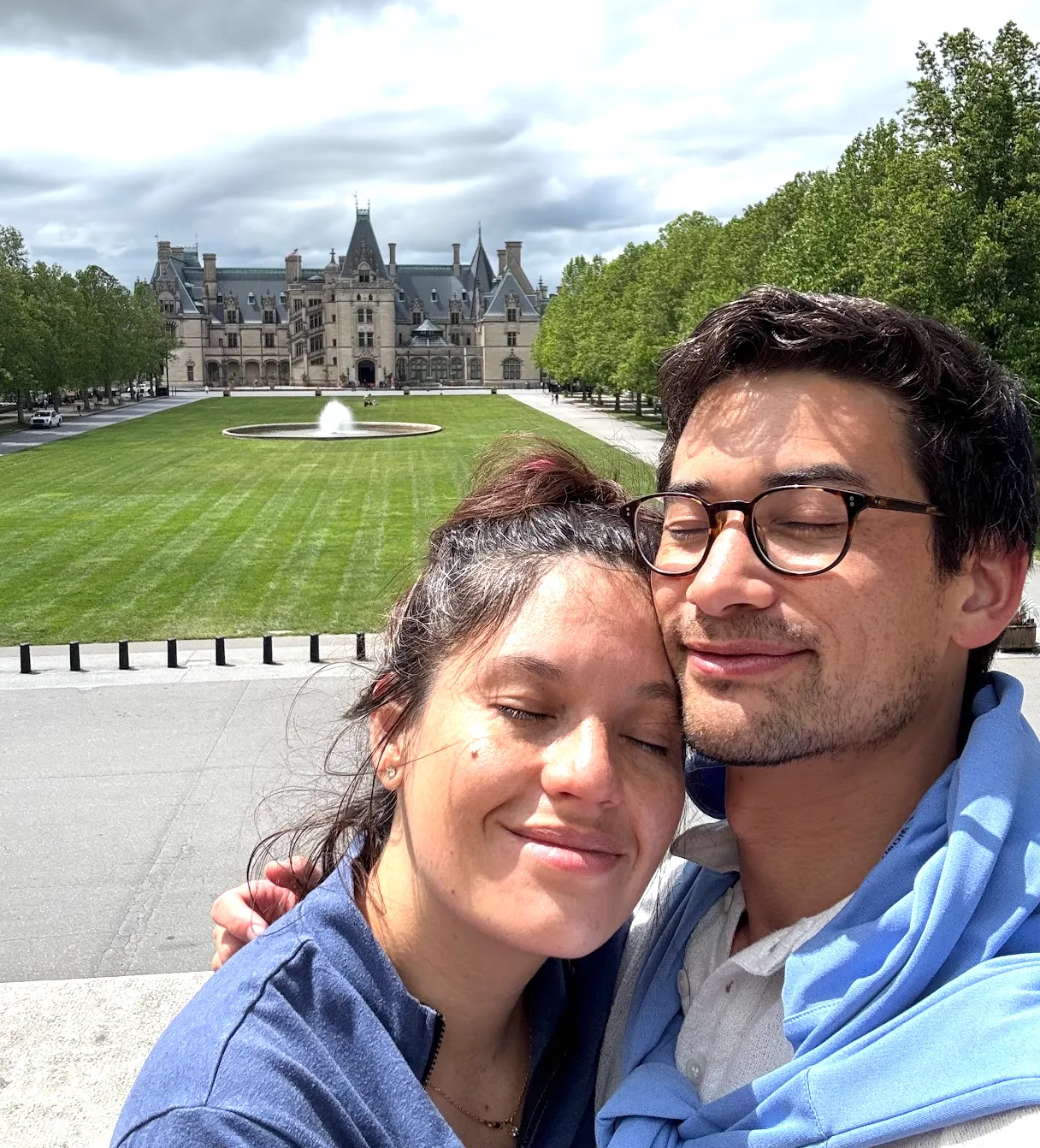
You turn the corner from the parking lot to the approach road and the house is waiting, a shrine to American aristocracy. George Washington Vanderbilt starts buying land near Asheville in the late 1880s. Richard Morris Hunt designs the house. Frederick Law Olmsted designs the grounds. Construction begins in 1889. The family opens the place on Christmas Eve 1895. Two hundred fifty rooms, more than four acres of floor space, mountain air, books, paintings, stone, lawns, views.
America is weird. We have always had this strange allergy to kings and this strange attraction to people who build on a ridiculous scale.
The important question is not whether the house is too big. Of course it is too big. That is half the point. The better question is what does the big thing become after long periods of time, after generations?
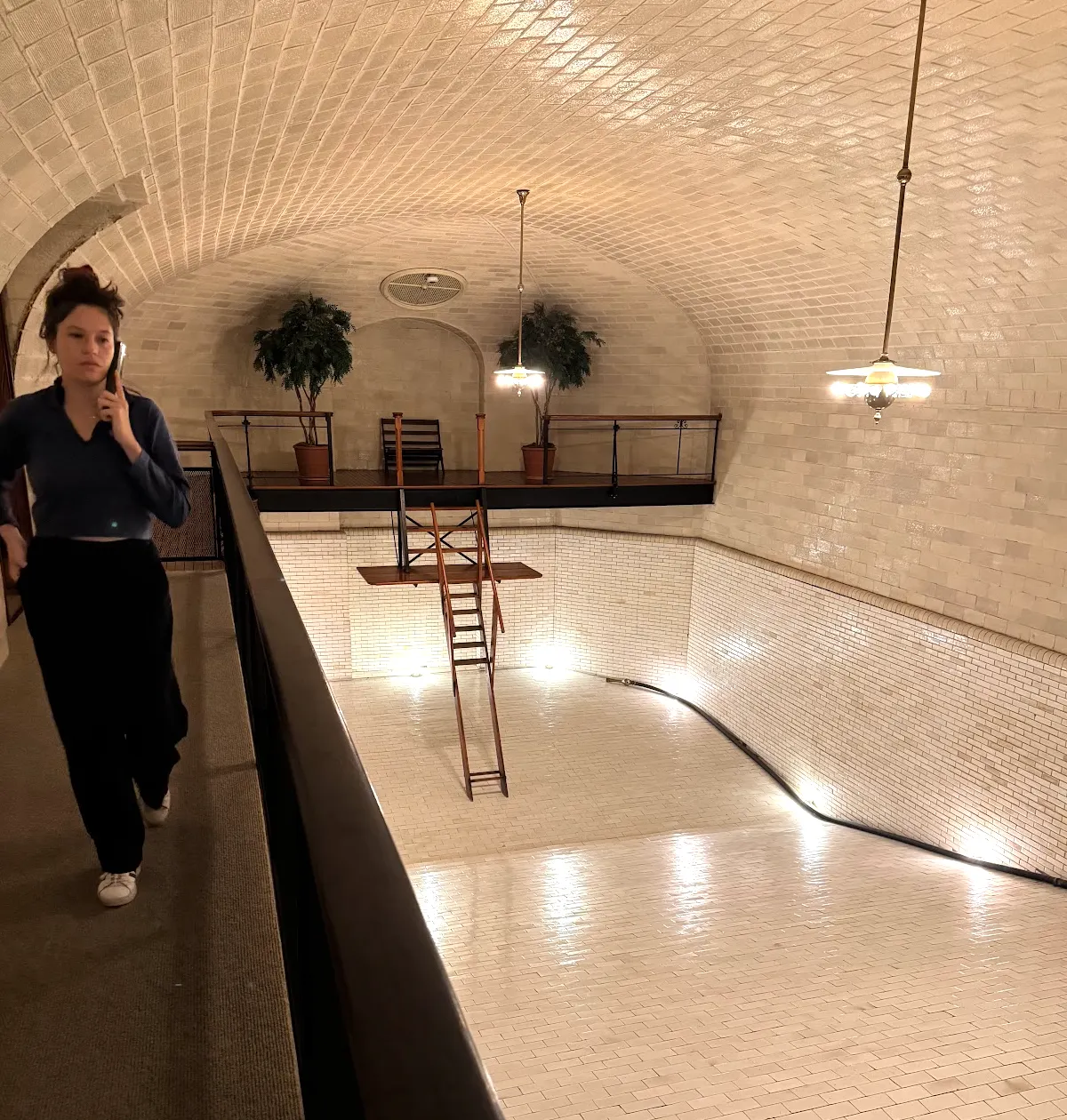
The photos from the visit keep making this argument better than my memory does. The empty swimming pool. The gymnasium. The rotisserie kitchen. The pastry kitchen. Storage rooms. Pantries. Preserving jars. Laundry. Corridors where the glamour thins out and the operating system shows.
Grandeur is never just taste. Somebody laid track. Somebody cut stone. Somebody moved limestone and brick and tile and wood. Somebody wired the house for electricity and telephones. Somebody kept water moving, heat running, meals appearing, sheets clean, guests guided, horses handled, books shelved, gardens alive.
The aristocratic fantasy is upstairs. The institution is downstairs.
A house like Biltmore is morally boring if it is only a rich man's appetite. It becomes interesting when you can inspect the machinery.
Biltmore opened to the public in 1930, during the Depression, under George Vanderbilt's daughter Cornelia and her husband John Cecil. A private house became a tourist institution nearly 100 years ago. Still family-owned, still commercial, still wrapped in inheritance and the whole strange pageant of American wealth. But also no longer private. People could enter. The house had to explain itself.
After Pearl Harbor, the National Gallery of Art in Washington prepared for the possibility that its collection could be vulnerable. It needed distance, security, temperature and humidity control, and secrecy. Biltmore had fireproof features, a remote location, refitted steel doors, other protective measures, and enough interior volume to disappear fragile civilization into the mountains.
So in January 1942, National Gallery works went to Biltmore. Paintings in the music room. Sculpture in the servants' dining room. Guards and staff watching over national treasures while the war rearranged the world outside.
A private house became a federal museum's backup drive. That is America.
The usual argument about wealth is too small for this. We want a clean moral handle: billionaires good, billionaires bad, capitalism good, capitalism bad, government good, government bad. Biltmore refuses to stay inside. The house is private vanity and public memory. It is labor hierarchy and preservation achievement. It is ridiculous family wealth and an emergency shelter for national art. It is a mansion, a museum, a farm, a hotel complex, a winery, a landscape, a local employer, and a machine for teaching visitors how to look at a version of America that is both embarrassing and impressive.
When people fight about private space companies or AI labs, social platforms, billionaire politics… we keep asking a garbled version of the Biltmore question. Is a private builder a king? Is he a contractor? A public servant? A danger? A symptom? A moat wearing the costume of progress?
The answer cannot be the person's net worth by itself. Wealth matters because wealth buys room to move. It buys lawyers, land, servers, influence, time, and exemption-seeking. The deeper institutional question is: what does the private capacity become when stress arrives?
Does it become infrastructure other people can use? This is the Biltmore test.
The fantasy of importing European aristocratic form into the Carolina mountains is very real. But the anti-king instinct should be aimed at sovereign exemption, not at scale itself. America at its best does not forbid ambition from becoming large. It subjects large ambition to time, use, exposure, ridicule, markets, family fights, tourists, historians, maintenance costs, and eventually crisis.
If the thing can teach strangers in peacetime and hide paintings in wartime, something has happened. A king says: this is mine because I am above you. A family, at least in the American version I want to believe in, says: this is ours for now, and the test is what we can make it become.
Families can be stupid. Families can hoard, decay, fight, sell, posture, and put velvet ropes around dead taste. But families can also hold continuity at a timescale longer than quarterly politics and shorter than empire. They can preserve a project long enough for it to change categories.
Biltmore changed categories.
It began as George Vanderbilt's impossible house. It became a regional landmark. It became public-facing during the Depression. It became wartime storage for national art. It became a preservation business, a garden, a winery, a place where people walk around with little audio devices and learn how a private dream was actually built.
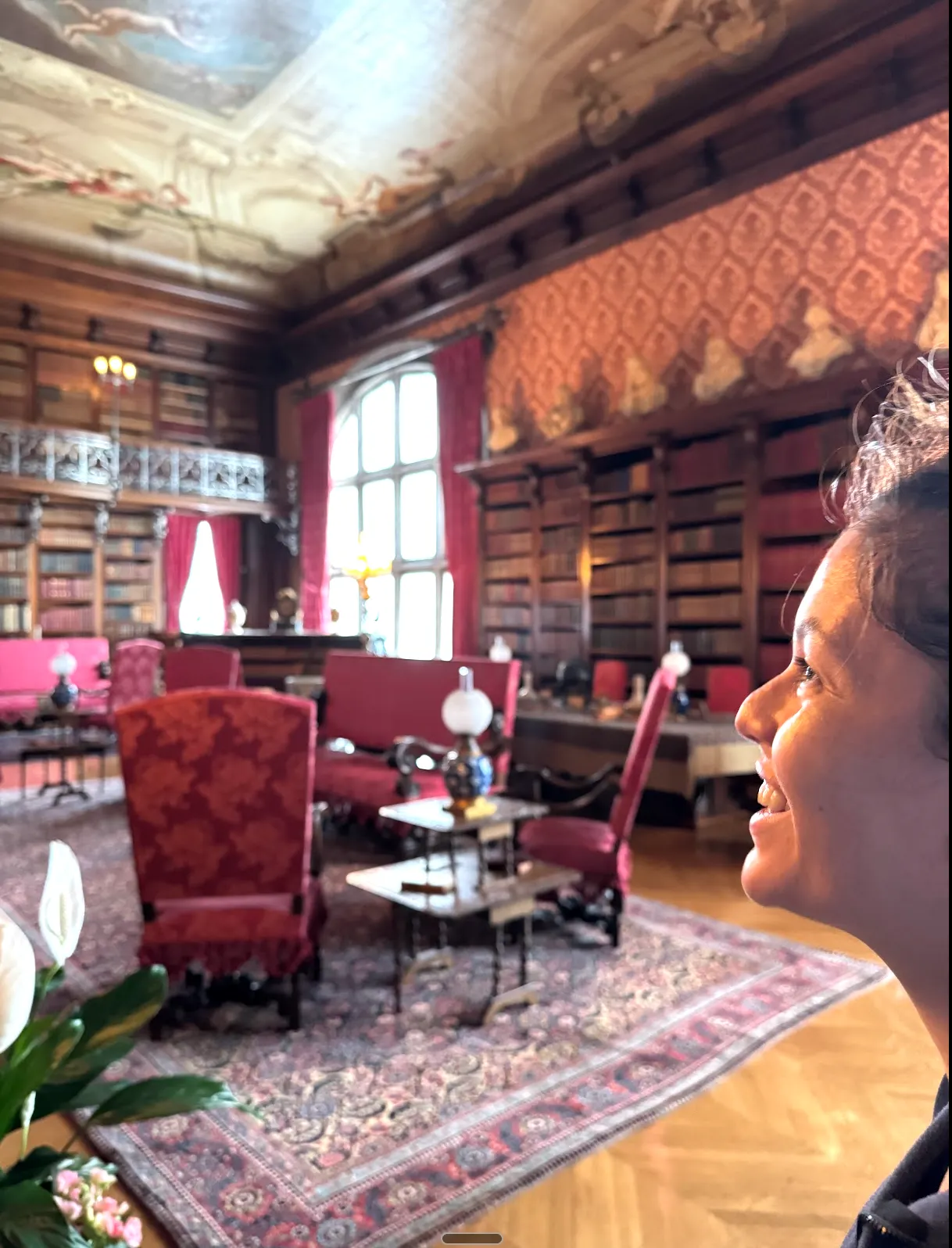
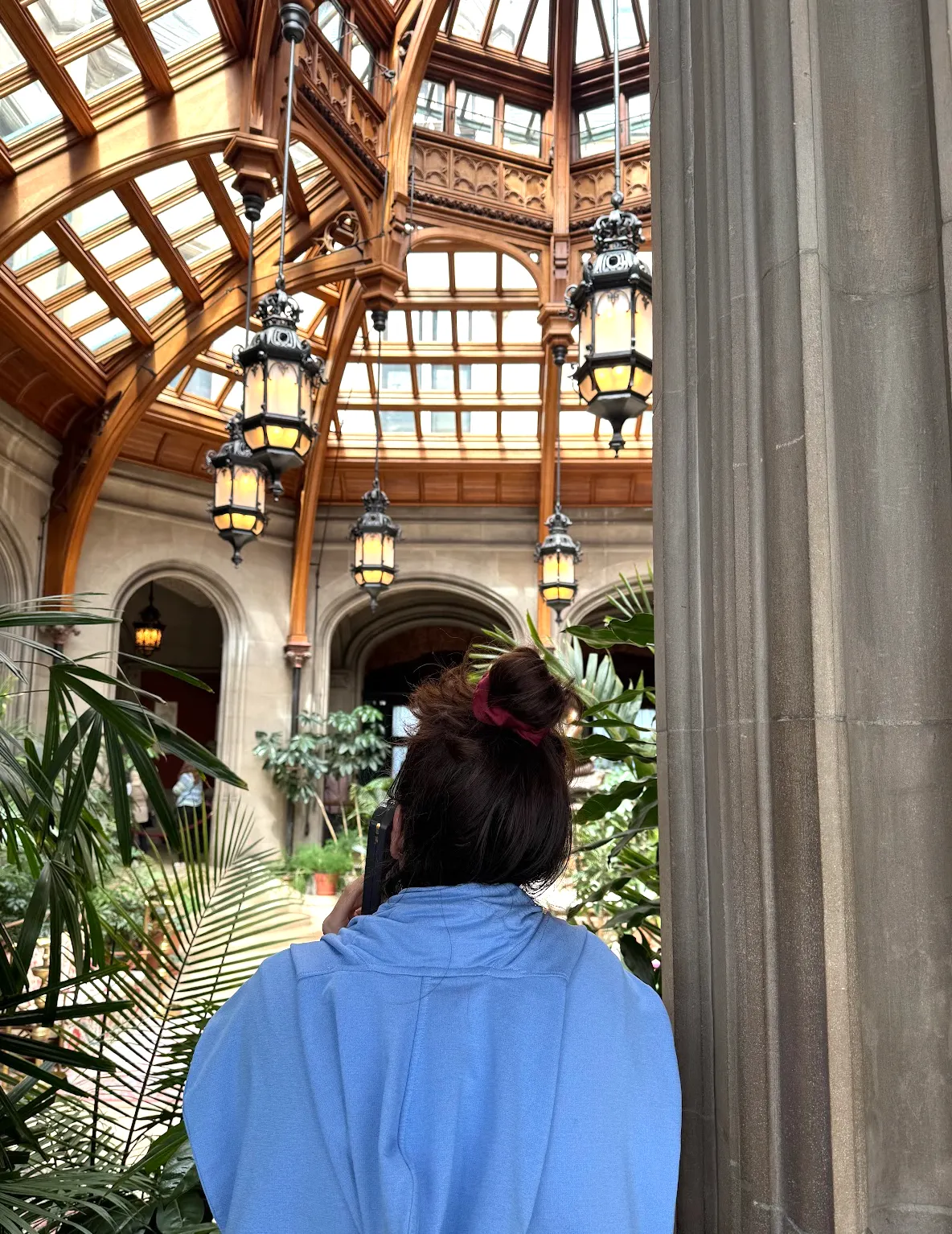
In a few of my favorite photos, Alex is holding the tour phone to her ear and looking at the rooms with the exact expression of someone trying to listen. Biltmore should not be worshiped. It should be listened through.
The country is arguing about the wrong half of the facade. We keep asking whether big private projects look too much like castles. Sometimes they do. Fine. Say so. Laugh at them. Tax them. Regulate them. Investigate them. Make the builder answer questions.
Go downstairs. Find the kitchen. Find the wiring. Find the staff corridor. Find the failure mode. Find the public dependency. Find the emergency use case. Find who has the keys when the founder is gone. These things take time, and patience.
The lesson I brought home from Asheville is not that America needs more mansions. God help us. The lesson is that America still needs impossible projects whose grandeur is forced to become institution. We need more builders willing to make things that outlast their own mood, and more citizens disciplined enough to inspect the basement before deciding whether the facade is a crown or a contribution.
“No kings” is not a preference for smallness. No kings is a demand that grandeur remain answerable.
Build the big thing. Open the doors. Show us the basement.
And when the war comes, protect the paintings for We The People.
there are a few more photos in the original post on Substack, please go subscribe over there!