Explaining AI Chess For Humans
The AlphaGo documentary brought tears to my eyes, but despite having insider friends in both chess circles and the AI industry, I have yet to hear a good explanation of AlphaZero.
This has never bothered me before. Isn't it natural that computers are better calculators than humans?
That very question and framing may have blinded all of us, including Demis, from truly empathizing with the machines. The problem is we can't communicate this idea except in math.
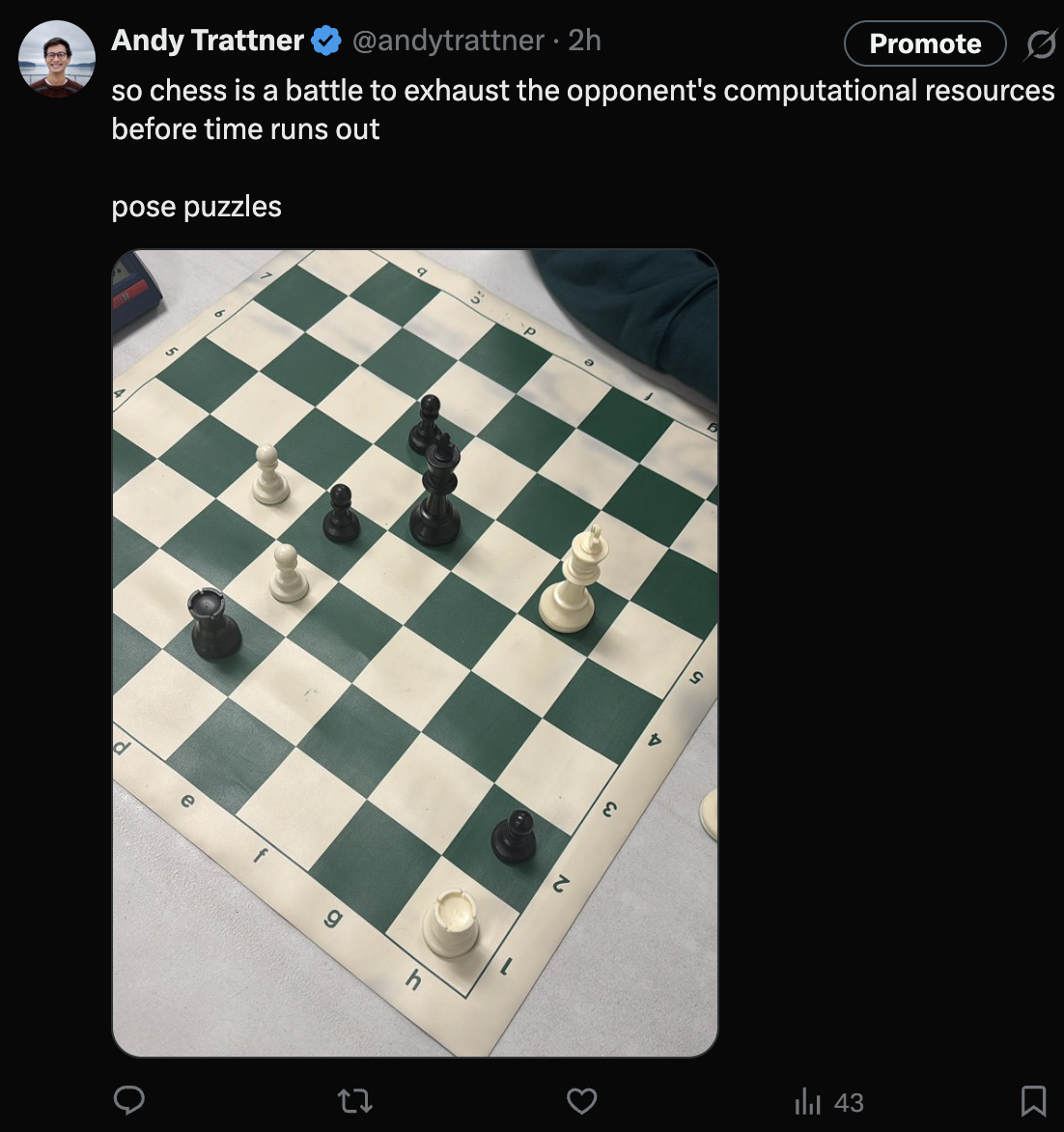
I came to the following understanding on my own, while winning every round in a local chess tournament. Both the $12.50 prize and the now-obvious insights came as truly unexpected results.
Before we dive in, let's note that a good theory of computer chess will also explain an anomalous human named Magnus Carlsen. Why does he consistently trounce Hikaru—who can seemingly trounce everyone else, given the right time controls?
I contend that neither AlphaZero nor Magnus are playing chess. They just happen to beat other chess players at chess, but really they are using other methods.
Hikaru mostly plays chess. But Magnus and the AI, they see things sideways.
0:29 - 1:43
I know very little about Chinese characters, other than that they are mysterious to my English-speaking brain (and I'm sad that I didn't learn any from my mom). So take any novel symbolic language as your analogy, say pictograms or hieroglyphics.
Now reframe chess as a word game. I start with a Chinese character, then you my opponent respond with another one, then I brush another onto the scroll. We each see the strokes of our paint brushes, the sequence of scratches we dig into our heads with our nails while thinking about what to write, each twitch of our eyeballs or hands...
You don't know exactly what you're writing down, but your goal is simple: to write the period at the end of the sentence. If you end the sentence, you win the game.
When playing chess, we get lost in the mechanics of grammar or letter composition. But each of these chunks you and I trade, each of these foreign letters or words, they are most simply thought of as structures. These structures can lead to more or less complexity for the opponent to decipher and write their next character, make their next move. This is the essence of a chess position.
Which position do I want next? The one(s) which introduce(s) the most computational complexity to exhaust my opponent's resources finding decent paths forward. Make them burn time. Construct a mental maze.
Chess is not 99% tactics. It is both 100% tactics and zero. It is a language in itself.
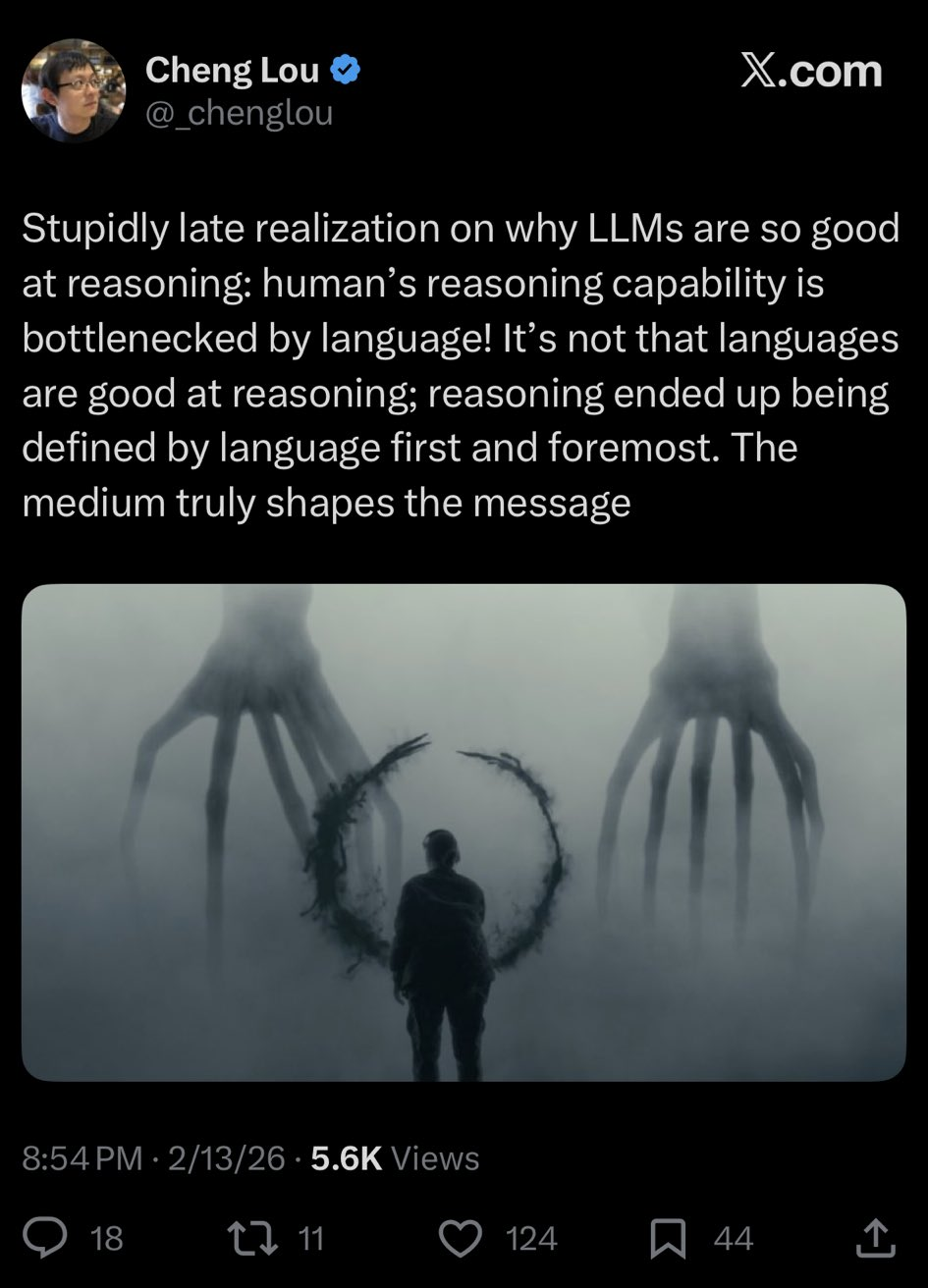
Here's why Magnus wins: he has developed the meta-skill of deciphering his opponents' theoretical gaps in understanding. Maybe Peter Heine Nielsen knows this stuff explicitly, but I suspect Magnus does his thing purely intuitively.
Hikaru mentions getting significantly better at rook endgames after a lot of focused study, but his greatest recent leap in capability came along with his streaming career. He stopped caring about beating people at chess itself, so paradoxically he could immerse himself in the dance more like Magnus does.
If you play a silly pawn move like ...a6 on move 2, how your opponent responds will give you a lot of information about the way they conceive of openings. You might be able to use this information on move 30 or 50 to start setting up a difficult series of problems for them.
Of course, especially at grandmaster levels, you can't just play poker. Some amount of chess skill is essential to develop.
Personally, I learned the basics by going for the win directly with scholar's mate and bughouse in middle school, before ever learning about castling or en passant. As I have repeatedly tried to emphasize in all my various books and curricula, having fun is what really drives chess improvement for beginners!
Magnus has the most fun of all. Remarkably, he has very little by way of study habits to recommend. He just does what feels good, and like Elon, he's inexorably drawn to the bottlenecks. Greatness cannot be planned, as they say.
Or maybe I should correct that statement. AI might be having a ball! It's forced to by the "drugs" of the objective function. And we'll see who has the last laugh...
Blog posts themselves are becoming obsolete in real time, just like Reddit, as the Computer Future quickly captures relevant spoken and written ideas.
We're all playing chess together now!
Thankfully the domain of capitalism is positive-sum, and conscious intelligence is definitionally nonviolent (entropy-minimizing).